What Is Chiropractic Care? How Spinal Alignment Supports Whole-Body Healing

Published on May 8th, 2026

Caitlyn Benton
Written by
Caitlyn Benton
Dr. Zeeshan Tayeb
Reviewed and Approved by
Dr. Zeeshan Tayeb

There is a particular frustration in carrying pain that everyone assures you is manageable — the stiffness that arrives before you've finished your first cup of coffee, the neck ache that spreads into your shoulders before lunch, the low back that quietly negotiates every time you stand up from a chair. Most people absorb these patterns for months before they consider doing something about them, having been told to rest, take ibuprofen, and give it time.

What many people don't realize is that spinal alignment — and how well the joints, nerves, and surrounding structures move together — has a measurable effect on pain, mobility, and how the body functions from day to day. Chiropractic care is the clinical discipline built around that understanding. At RegenLife Centers for Integrative Pain & Weight Management, chiropractic care is not offered as an alternative to evidence-based medicine but as a precise, non-invasive component of it — integrated with physical therapy, regenerative treatment, and lifestyle medicine to address musculoskeletal pain at its source.

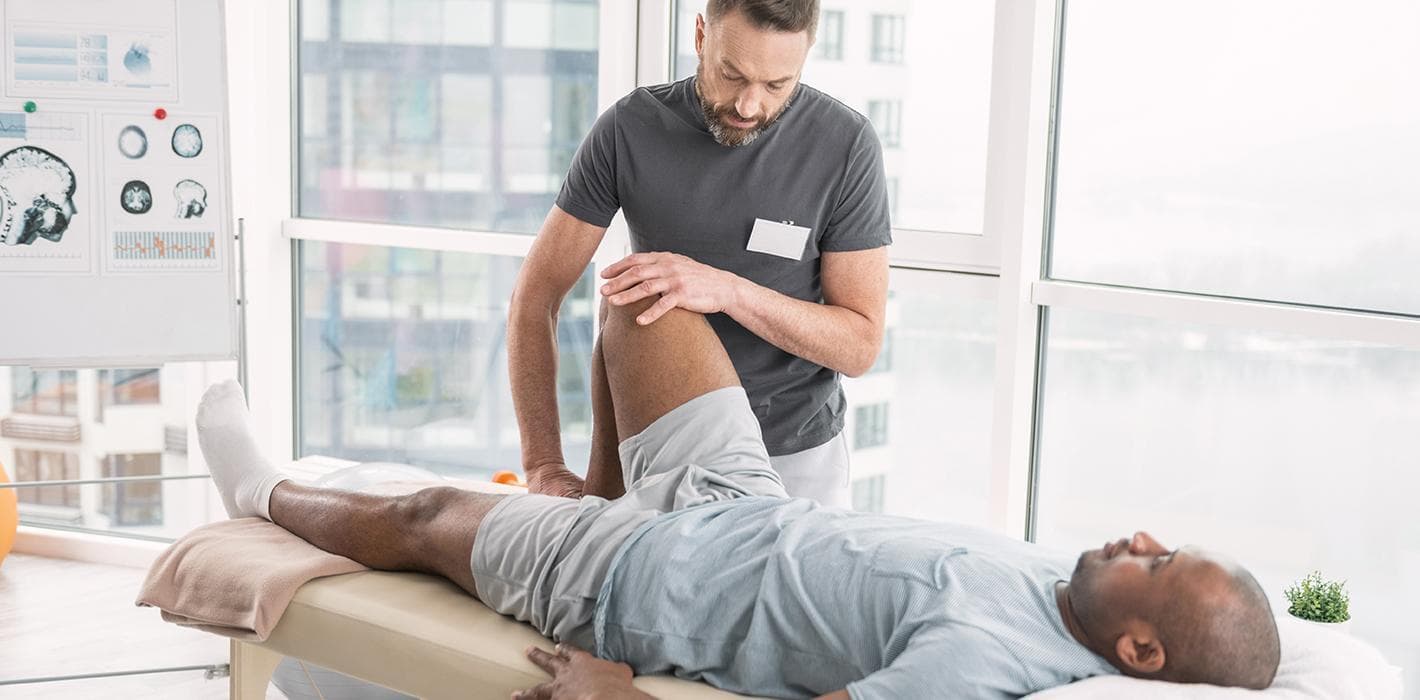
Professional physiotherapist adjusting a patient's neck in a medical office.Professional physiotherapist adjusting a patient's neck in a medical office.

Key Takeaways

  • More than 35 million Americans are treated by chiropractors each year — approximately 10% of the adult population — making chiropractic one of the most widely used non-pharmacological healthcare options in the United States
  • A review of clinical evidence found that 90% of studies favored spinal manipulative therapy (SMT) for low back pain, and 100% favored SMT for neck pain, with 33 clinical practice guidelines producing 59 SMT-related recommendations
  • Chiropractic care is classified as a non-invasive, drug-free treatment with a well-documented safety profile; patients receiving chiropractic care for spinal pain are significantly less likely to be prescribed opioids than those receiving conventional care alone
  • The most evidence-supported applications of chiropractic care are low back pain, neck pain, tension-type headaches, and sciatica — with growing research supporting its role in broader musculoskeletal and integrative care programs

What Chiropractic Care Is — and What It Actually Does

Chiropractic is a licensed healthcare discipline focused on diagnosing, treating, and preventing disorders of the musculoskeletal system — with particular emphasis on the spine — and the effects those disorders have on pain, function, and neurological integrity. The primary therapeutic tool is spinal manipulative therapy (SMT), also called a chiropractic adjustment: a controlled, targeted force applied to a specific spinal joint to restore normal movement, reduce joint restriction, and decrease associated pain.

The discipline was formally established in the late 19th century and has evolved substantially through clinical research. Today's evidence-based chiropractic care bears little resemblance to its historical roots. Modern chiropractors assess motion, perform orthopedic and neurological examinations, interpret imaging, and develop individualized treatment plans that may include spinal manipulation, joint mobilization, soft tissue therapy, corrective exercise, and patient education.

The Mechanism Behind the Adjustment

A spinal adjustment targets a joint that has lost its normal range of motion — what clinicians call a restricted or hypomobile joint. During the adjustment, the chiropractor applies a precise, high-velocity, low-amplitude thrust to that joint, which temporarily separates the joint surfaces. This often produces the characteristic audible pop — the result of dissolved gas releasing from the synovial fluid — though research has confirmed that the therapeutic effect does not depend on producing that sound.

The adjustment triggers several measurable biological responses:

  • Neurophysiological modulation — spinal manipulation activates descending pain-inhibiting pathways in the brain, increasing pain tolerance and reducing local pain perception through mechanisms similar to other forms of manual therapy
  • Restoration of joint kinematics — restricted joints generate abnormal afferent signaling to the spinal cord and brain; restoring normal movement reduces that aberrant input
  • Muscle reflex normalization — restricted spinal segments are associated with increased muscle tone in surrounding musculature; adjustment reduces this hypertonicity and restores balanced muscle activation
  • Reduction of local inflammatory markers — some evidence suggests that SMT modulates local inflammatory cytokine activity in treated segments

What Chiropractors Evaluate

Before any treatment, a thorough chiropractic evaluation assesses the specific biomechanical picture driving a patient's symptoms. This typically includes:

  • Postural and gait analysis — identifying compensatory patterns that place abnormal load on specific spinal segments
  • Range of motion testing — measuring restrictions in cervical, thoracic, and lumbar mobility
  • Orthopedic and neurological assessment — ruling out red flags, identifying nerve involvement, and differentiating spinal from extra-spinal pathology
  • Imaging review — interpreting X-ray or MRI findings in the context of clinical presentation
  • Functional movement screening — identifying the movement deficits that perpetuate a patient's pain pattern

This diagnostic precision is what separates effective chiropractic care from generalized spinal manipulation. Knowing which segment to treat, how to treat it, and what else needs to change is what produces lasting results.


Conditions Chiropractic Care Treats: Where the Evidence Is Strongest

A doctor explains spinal issues to a patient using a spine model during a medical consultation.A doctor explains spinal issues to a patient using a spine model during a medical consultation.

The clinical evidence for chiropractic treatment is not uniformly strong across all conditions — and understanding where the research is robust, where it is emerging, and where it is weaker is essential for making appropriate treatment decisions.

Low Back Pain: The Most Evidence-Supported Application

Low back pain is the condition for which chiropractic spinal manipulation has the strongest evidence base. A 2024 review published in the Journal of Clinical Medicine (PMC11476883) reviewed research trends and clinical guidelines for spinal manipulation and found that the majority of well-designed studies favor SMT for both acute and chronic low back pain, with spinal manipulation consistently producing clinically meaningful improvements in pain intensity and disability scores.

Multiple international clinical practice guidelines — including those from the American College of Physicians — recommend spinal manipulation as a first-line non-pharmacological treatment for low back pain, before considering medications or invasive procedures. A 2024 study published in Medical Xpress found a significant reduction in lumbar spine reoperation rates among patients who received chiropractic spinal manipulation before surgery, suggesting that chiropractic care may also have a role in surgical outcome optimization.

For patients who have not responded to rest and anti-inflammatories, the relevant question is not whether to try chiropractic care — it is whether the specific presentation is appropriate for SMT or whether a combined approach with physical therapy and exercise therapy will produce better outcomes. For most patients with mechanical low back pain, the answer is: both.

Neck Pain and Cervicogenic Headaches

Evidence-based guidelines for the chiropractic treatment of adults with neck pain have been formally developed and validated. 100% of studies reviewed in one major evidence synthesis favored SMT for neck pain, with multimodal chiropractic care — combining manipulation with soft tissue therapy, mobilization, and exercise prescription — showing the greatest benefit.

Cervicogenic headaches — those originating from the upper cervical spine — respond particularly well to chiropractic manipulation targeting the C1–C3 region. The mechanism is well-understood: restricted upper cervical joints generate abnormal sensory input that converges with trigeminal pain pathways, producing headache patterns that are indistinguishable from tension-type headaches. Restoring normal C1–C3 motion reduces that convergent pain input. Clinical trials demonstrate that chiropractic manipulation produces superior headache frequency and intensity outcomes compared to soft tissue massage alone in patients with cervicogenic headache.

Sciatica and Radicular Pain

A 2025 retrospective cohort study published in PMC (PMC11774384) found that patients receiving chiropractic spinal manipulation for sciatica had significantly lower rates of opioid-related adverse events than those receiving conventional care. This finding reflects both the direct pain-modifying effect of SMT on radicular symptoms and the downstream benefit of reducing reliance on pharmacological management.

For sciatica driven by lumbar disc herniation or facet joint compression of the nerve root, chiropractic care offers targeted decompression and joint restoration that can reduce nerve irritation without pharmaceutical intervention. Patients with clear neurological deficits — objective motor weakness or progressive sensory loss — require immediate imaging and may not be appropriate candidates for spinal manipulation as a first intervention; that clinical judgment is part of the chiropractic evaluation.

Other Musculoskeletal Conditions

Chiropractic management extends beyond the spine. Chiropractors evaluate and treat:

  • Shoulder pain — rotator cuff tendinopathy, AC joint dysfunction, and thoracic spine restriction patterns that alter shoulder mechanics
  • Hip pain — sacroiliac joint dysfunction, piriformis syndrome, and hip flexor restrictions linked to lumbar mechanics; read more in our overview of hip pain treatment in Cincinnati
  • Knee pain — patellofemoral syndrome and biomechanical tracking issues influenced by lumbar and pelvic alignment; explored further in non-surgical knee pain treatment in Cincinnati
  • Whiplash and sports injuries — post-traumatic joint restriction, cervical instability, and myofascial adhesion
  • Postural dysfunction — forward head posture, thoracic kyphosis, and lumbar hyperlordosis patterns that generate chronic loading on specific segments

How Spinal Alignment Connects to Broader Health

A physiotherapist performs a back alignment therapy on a patient indoors.A physiotherapist performs a back alignment therapy on a patient indoors.

One of the more clinically interesting areas of chiropractic research involves how spinal function relates to nervous system regulation beyond the immediate pain signal. The spine houses and protects the spinal cord and provides exit points for the nerve roots that supply every organ, muscle, and region of the body. When spinal mechanics are significantly disrupted, the effect is not limited to the local joint.

Heart Rate Variability and Autonomic Regulation

Two decades of accumulated chiropractic research — including systematic reviews and randomized controlled trials — document improvements in heart rate variability (HRV) following spinal manipulation in certain patient populations. HRV is a direct measure of autonomic nervous system balance: higher variability reflects a more adaptable, parasympathetically active nervous system; lower variability is associated with chronic stress, pain conditions, and cardiovascular risk.

These findings do not suggest that chiropractic adjustment treats heart disease — but they do indicate that spinal manipulation may have broader neurophysiological effects than pain reduction alone, likely mediated through descending inhibitory pathways and autonomic reflex arcs running through the spinal cord. A 2024 review in PMC (PMC11016242) examined the integrative relationship between vertebral function and neuroendocrine-immune signaling, finding plausible biological mechanisms for spinal manipulation's effects on adaptive physiology beyond the musculoskeletal system.

The practical implication is that for patients managing chronic pain, the nervous system dysregulation that accompanies it — elevated sympathetic tone, poor sleep, heightened pain sensitivity — may be partially addressed by restoring normal spinal mechanics, particularly when integrated with lifestyle interventions.

Posture, Load Distribution, and Downstream Tissue Stress

Every deviation from neutral spinal alignment places abnormal compressive and tensile load on structures that were not designed to bear it continuously. Forward head posture — in which the head translates anterior to its natural position — adds approximately 10 pounds of effective weight to the cervical spine per inch of anterior translation. A 2-inch forward head position generates load equivalent to carrying a 20-pound weight from the cervical spine — sustained across every waking hour.

The consequence is not only neck pain. The thoracic spine compensates by rounding forward, which restricts rib expansion and alters breathing mechanics. The lumbar spine hyperextends to compensate for thoracic kyphosis, increasing shear force at L4–L5 and L5–S1 — the segments most commonly involved in disc herniation and nerve compression.

Addressing spinal alignment is therefore not cosmetic correction — it is mechanical offloading of structures that would otherwise continue to accumulate damage. Chiropractic care that targets the specific segments involved in a patient's compensation pattern, combined with postural rehabilitation, produces durable changes in load distribution that symptomatic treatment alone cannot achieve.

Blood Pressure and Vascular Tone

Some chiropractic research has examined effects on blood pressure, particularly studies targeting the upper cervical spine (specifically the atlas, or C1 vertebra). A study conducted at the University of Chicago Hypertension Center found that specific upper cervical adjustments produced significant reductions in blood pressure in hypertensive patients compared to sham manipulation — with effects comparable to those of two antihypertensive medications combined. These findings are preliminary and have not yet been confirmed in large-scale trials, but they point toward neurophysiological effects of cervical manipulation that extend beyond local pain reduction.

These areas of research should be understood as emerging, not established. The primary, evidence-supported applications of chiropractic care remain musculoskeletal pain and dysfunction — and that evidence is robust enough to place chiropractic squarely within evidence-based, non-surgical pain management.


What to Expect at Your First Chiropractic Visit

For patients unfamiliar with chiropractic care, uncertainty about the process is often a barrier to seeking it. A well-structured first visit follows a predictable clinical workflow:

Initial History and Examination The chiropractor takes a detailed history of the patient's symptoms: onset, location, aggravating and relieving factors, prior treatments, and relevant medical history. This is followed by a physical examination including postural assessment, range of motion testing, orthopedic provocative tests, and neurological screening.

Imaging Review or Ordering If imaging has already been performed, the chiropractor reviews it in the context of clinical findings. If not, they may order X-rays if they are clinically indicated — though not all presentations require them.

Treatment Plan Discussion Before any adjustment is performed, the chiropractor explains the clinical findings, the proposed treatment approach, the expected timeline, and the goals of care. An appropriate provider will also discuss what the treatment cannot accomplish and when referral to other specialists is warranted.

First Treatment The first adjustment is typically gentle and targeted to the most clinically relevant segments identified in the examination. Patients often notice an immediate improvement in range of motion or a reduction in local muscle tightness. Some experience mild soreness for 24–48 hours afterward, similar to the feeling after a new exercise — this is a normal tissue response and is not a sign that the treatment was harmful.

Follow-Up Plan For acute presentations, a typical initial course of care is 6–12 visits over 4–6 weeks, with reassessment at each stage. Patients who are not showing improvement after an appropriate number of visits should be reassessed and, if needed, referred for further evaluation or additional treatment modalities.


Chiropractic Care as Part of an Integrated Treatment Plan

Chiropractic care produces its best outcomes when it is not the only intervention being delivered. The spine does not exist in isolation, and pain rarely has a single cause. At RegenLife Centers, chiropractic care is integrated with complementary approaches that address the full picture:

Condition
Chiropractic Role
Integrated Additions
Chronic low back pain
Spinal joint restoration, segment decompression
Exercise therapy, lifestyle medicine
Neck pain and headaches
Cervical manipulation, myofascial release
Physical therapy, MLS laser
Sciatica
Lumbar/sacral manipulation, nerve tension reduction
Exercise therapy, regenerative injections
Sacroiliac dysfunction
SI joint manipulation, pelvic alignment
Physical therapy, prolotherapy
Postural dysfunction
Thoracic and lumbar correction
Corrective exercise, lifestyle coaching
Sports and whiplash injuries
Joint restoration, soft tissue therapy
MLS laser, regenerative program

When Chiropractic Care Is Combined with Regenerative Treatment

For patients whose pain has a structural component — tendon or ligament damage, partial labral tears, articular cartilage degeneration — chiropractic care and regenerative injections address different aspects of the same problem. Chiropractic care restores normal mechanics; regenerative treatment addresses the tissue-level damage those mechanics were protecting against. Delivered in sequence or concurrently, the two approaches create a more complete resolution than either achieves alone.

Patients managing hip joint pathology, for example, often have concurrent lumbar spine and sacroiliac dysfunction that alters hip loading mechanics — meaning that PRP or prolotherapy delivered to the hip without addressing the spinal contributors may produce incomplete results. Chiropractic assessment identifies and corrects those upstream contributors.

When Chiropractic Care Is Combined with Physical Therapy and Exercise

The most durable outcomes in chiropractic care come when spinal manipulation is paired with a targeted exercise program. Manipulation restores the joint's mechanical freedom; exercise rebuilds the muscular support that prevents the restriction from returning. Without the second step, many patients require ongoing maintenance adjustments to maintain what the first adjustment achieved — a cycle that is less efficient and less satisfying than the combination approach.

Exercise therapy for spinal conditions targets the specific neuromuscular deficits — core stability, gluteal activation, deep cervical flexor strength — that allowed the spinal restriction to develop in the first place. Physical therapy adds manual techniques, joint mobilization, and movement re-education that extend what chiropractic manipulation initiates.

For patients with back pain specifically, this integration is explored in depth in our overview of exercise therapy for back pain in Cincinnati.


Chiropractic Care at RegenLife Centers Cincinnati OH

At RegenLife Centers for Integrative Pain & Weight Management, chiropractic care is delivered as part of a clinician-directed, individualized treatment plan — not as a standalone protocol applied uniformly regardless of presentation. The evaluation determines not only whether chiropractic care is appropriate, but which segments to target, what adjunctive interventions will produce the best outcomes, and when the clinical picture warrants referral to other specialists within the team.

Our integrative approach to musculoskeletal and spinal conditions may include:

  • Chiropractic care — spinal manipulation, joint mobilization, and soft tissue therapy targeting the specific biomechanical deficits identified on evaluation
  • Physical therapy — manual therapy, therapeutic exercise, and movement re-education to restore function beyond what manipulation alone achieves
  • Exercise therapy — progressive loading programs calibrated to the patient's current capacity and the healing demands of specific structures
  • MLS laser therapy and red light therapy — photobiomodulation to support soft tissue repair and reduce inflammation in the structures surrounding restricted joints
  • Regenerative program — PRP or prolotherapy for patients with underlying connective tissue damage that mechanical correction alone cannot address
  • Lifestyle medicine — nutritional anti-inflammatory strategies, sleep optimization, and stress reduction that create the biological environment in which tissue repair and nervous system regulation are possible

When a condition genuinely warrants surgical evaluation — a herniated disc with progressive neurological deficits, spinal stenosis causing cord compression, or structural instability that conservative care cannot address — that referral is provided clearly and without delay. What does not happen is recommending surgery before a well-designed, integrated non-surgical program has been genuinely delivered.


If you have been managing spinal pain, headaches, sciatica, or musculoskeletal dysfunction that has not fully resolved with rest or medication, a chiropractic evaluation at RegenLife Centers in Cincinnati can clarify what is driving your symptoms and what a personalized, integrated treatment plan can realistically achieve. Schedule a consultation to discuss your options.


Frequently Asked Questions

Find answers to common questions

Ready to Learn More?

To learn more and to find out if you might be a good candidate at RegenLife, schedule a consultation with our team today.

About the Author

Caitlyn Benton

Caitlyn Benton, Research Manager at RegenLife

As Research Manager, Caitlyn Benton oversees the strategic planning and execution of clinical research projects, ensuring all studies adhere to the highest regulatory and ethical standards. With expertise in protocol development and data monitoring, she coordinates multidisciplinary teams to ensure the integrity of our clinical research programs and the accuracy of the insights shared with our patients.

Reviewed and Approved by

Dr. Zeeshan Tayeb

Dr. Zeeshan Tayeb, Medical Director at RegenLife

Interventional Spine, Pain, and Sports Medicine Dr. Zeeshan Tayeb, MD is a double-board certified physician with a specialized fellowship in interventional spine, pain, and sports medicine. He sees patients at Pain Specialists of Cincinnati/RegenLife in Cincinnati, Ohio. Dr. Tayeb's background in physical medicine and rehabilitation has provided the foundation for his comprehensive approach to treating the whole person. Dr. Tayeb has done extensive training and education in both functional and regenerative medicine and specializes in state-of-the-art treatments, including laser therapies, PRP and stem-cell injections, and nutritional and hormonal optimization.

Disclaimer:

As a service to our readers, RegenLife provides access to our library of archived content. Please note the date of last review or update on all articles.

No content on this site, regardless of date, should ever be used as a substitute for direct medical advice from your doctor or other qualified clinician.

Stay Updated With Our Latest News

Check back regularly for new articles and updates about pain management treatments, practice news, and health tips from our team of specialists.

Get In Touch

Ready to Meet Our Team?

Our team is here to help you with any questions about our pain management services. Fill out the form below and we'll get back to you as soon as possible.

RegenLife Logo

Cincinnati

3328 Westbourne Dr,

Cincinnati, OH 45248

(513) 922-2204

Edgewood

162 Barnwood Dr,

Edgewood, KY 41017

(859) 331-4159

We accept most major insurance plans

RegenLife Logo

Our Locations

Cincinnati Clinic

3328 Westbourne Dr,

Cincinnati, OH 45248

(513) 922-2204

Edgewood Clinic

162 Barnwood Dr,

Edgewood, KY 41017

(859) 331-4159

Hours of Operation

Monday - Friday8:00am - 5:00pm
Saturday9:00am - 3:30pm
SundayClosed
© 2026 RegenLife.All rights reserved. Designed by Aalpha